
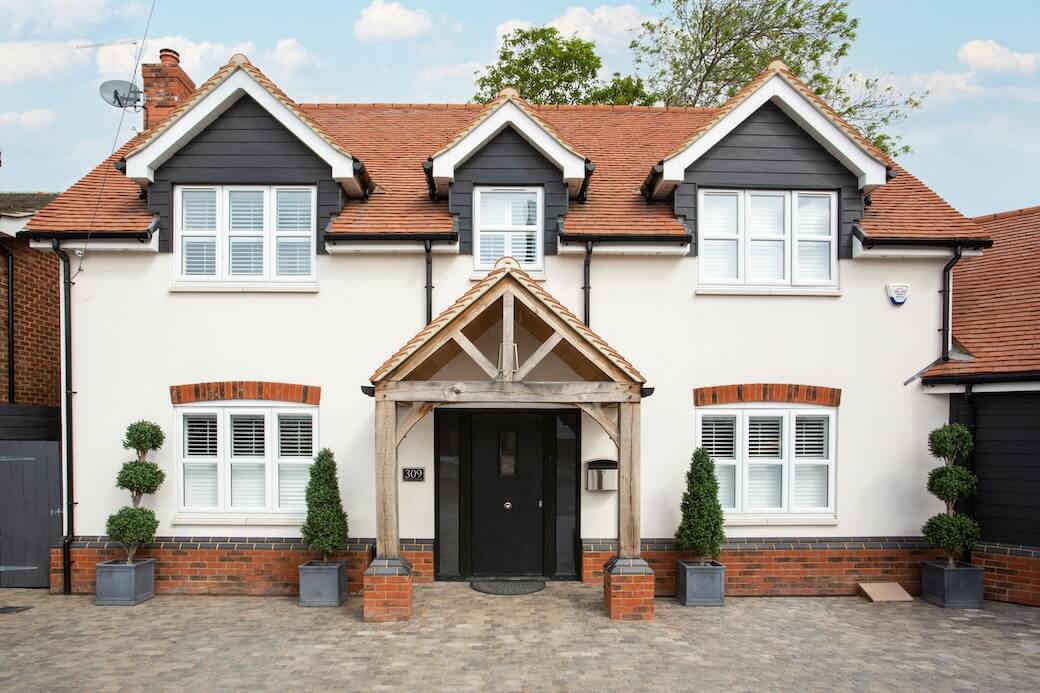
These legally binding agreements require developers to make financial contributions or provide affordable housing, infrastructure, and community facilities as a condition of planning approval. The money is meant to offset the impact of new development on the local area: schools, transport links, healthcare facilities, parks, and affordable housing.
The problem is that councils across England and Wales are holding over £6 billion in unspent Section 106 contributions, money developers paid years ago for infrastructure that was never delivered.
If you have paid S106 contributions, some of that money may be recoverable. Below is how the agreements work, what councils must do with the money, and how to reclaim what they have not spent.
What are Section 106 agreements?
Section 106 agreements (also called S106 agreements or planning obligations) are negotiated between developers and local planning authorities under the Town and Country Planning Act 1990.
They make developments acceptable in planning terms by requiring developers to:
- Provide affordable housing (on-site or via financial contribution)
- Fund infrastructure improvements (roads, public transport, utilities)
- Contribute to education facilities (new schools, school expansions)
- Support healthcare provision (GP surgeries, health centres)
- Create or improve public spaces (parks, play areas, community centres)
S106 contributions are project-specific and negotiated as part of the planning application. The obligations depend on the development’s size, location, and impact on local infrastructure.
Once agreed, S106 obligations are legally binding on the land itself: if the property is sold, the new owner inherits them. Developers must fulfil them before occupation or within set timeframes. Failure to comply can lead to enforcement action, planning breaches, or being unable to sell units.
“You have no automatic right to repayment of S106 contributions. You have to negotiate it into the agreement.”
The problem: £6 billion+ in unspent S106 contributions
Once developers pay S106 contributions, councils are supposed to spend them on the agreed purposes within set timeframes, typically 5 to 10 years depending on the agreement.
Councils often don’t. Research by the Home Builders Federation found that:
- Over £6 billion in Section 106 contributions remains unspent across England and Wales
- 26% of unspent contributions have been held for more than 5 years (approximately £1.6 billion sitting unused for half a decade or longer)
- Some councils hold individual contributions unspent for 10, 15, even 20+ years
- Only a small fraction of developers successfully reclaim unspent funds, despite having legal rights to do so
The money sits in council accounts while the infrastructure or affordable housing it was meant to fund never appears.
Why this happens:
1. Poor tracking and administration
Many councils have no reliable system for tracking S106 contributions. Money arrives from multiple developments over years, gets pooled with general funds, and loses its link to specific projects.
Without proper monitoring, councils don’t know what they’ve collected or what it’s earmarked for.
2. Resourcing and capacity constraints
Local authorities face staffing shortages, budget pressures, and competing priorities.
Even when they know S106 funds exist, they lack the capacity to plan, procure, and deliver the infrastructure those funds were meant to pay for.
3. Waiting for “big ticket” projects
Some councils justify holding S106 contributions by saying they’re accumulating funds for large projects such as a new school, major road improvements, or significant community facilities.
That can be legitimate. It doesn’t explain contributions left unallocated for years, or held past the timeframes in the agreement.
4. Political and strategic inertia
Infrastructure projects need political will, cross-department coordination, and long-term planning. Sometimes councils simply fail to prioritise spending, or internal disagreements delay decisions indefinitely.
Your legal right to reclaim unspent contributions
You have no automatic statutory right to repayment of S106 contributions. Repayment rights must be negotiated into the Section 106 agreement itself, usually as a “clawback clause.”
A well-drafted clawback clause will specify:
- The timeframe for spending (typically 5 to 10 years from payment)
- What triggers repayment (unspent or unallocated funds after the specified period)
- Interest on unspent contributions (include it: councils shouldn’t profit from not spending)
- The process for claiming repayment (formal written request, evidence requirements)
If your S106 agreement includes a clawback clause and the timeframe has passed, you are legally entitled to request repayment of unspent funds plus accrued interest.
Councils don’t return money of their own accord. It’s up to the developer to track contributions, check whether they’ve been spent, and formally request repayment when deadlines pass.
Many developers don’t know about clawback rights, stop tracking contributions once paid, or assume councils will spend the money as intended. As a result, billions in unspent S106 funds remain in council accounts indefinitely, even though developers have legal rights to reclaim them.
How to track and reclaim unspent Section 106 contributions
If you’ve made S106 contributions, this is how to reclaim unspent funds:
1. Keep detailed records
Track every S106 agreement:
- contribution amount, payment date,
- intended purpose, spending timeframe (usually 5 to 10 years),
- and the exact clawback clause wording.
Without records, you won’t know when repayment rights trigger.
2. Monitor via Infrastructure Funding Statements
Since 2019, councils must publish annual Infrastructure Funding Statements (IFS) showing S106 income, spending, and unallocated balances.
Search “[Council name] Infrastructure Funding Statement” on their website.
If your contribution looks unspent beyond the agreed timeframe, you likely have grounds for repayment.
3. Use FOI requests for detail
If the IFS lacks specifics, submit a Freedom of Information request asking:
- Has my contribution been spent?
- On what project and when?
- If unspent, is it allocated?
- Total amount remaining (including interest)?
4. Submit a formal repayment request
Once the clawback period expires, send a formal written request (email and recorded delivery) including:
- S106 reference, contribution amount and date,
- evidence the timeframe has passed,
- IFS/FOI evidence,
- request for repayment plus interest,
- and a 28-day response deadline.
Councils often resist (“it’s allocated,” “we’re planning to spend it soon,” “administrative delays”). Stand firm. If your clawback period has expired, you’re legally entitled to repayment.
5. Escalate if necessary
If the council refuses, instruct solicitors or specialist S106 reclaim advisers (who work on contingency, taking a percentage of recovered funds).
Many councils settle before litigation. Unspent contributions past clawback dates are legally indefensible.
Protecting your position in future S106 agreements
The best defence is negotiating strong terms up front.
Every S106 agreement should include a clawback clause with a clear spending timeframe (5 years instead of 10 brings repayment rights forward), explicit repayment triggers for unspent or unallocated funds, interest on unspent contributions, and a defined repayment process.
Negotiate shorter spending windows where you can. 3 to 5 years reduces the risk of indefinite non-spending. Consider requiring annual reporting from the council on spending progress, which gives you accountability and early warning if nothing is happening.
Use solicitors experienced in planning obligations. Standard council templates favour the local authority, and proper legal advice makes sure clawback clauses are enforceable and your interests are protected through the negotiation.
What’s at stake for developers
S106 contributions are significant costs, often hundreds of thousands or millions depending on the scheme. If a council has not spent them within the agreed period, and your agreement has a clawback clause, that money should come back to you.
If you’ve made S106 contributions in the past 5 to 10 years, check each council’s Infrastructure Funding Statement against your agreements.
How a lender reads your S106
A lender sizing a development loan treats S106 as a cost of the scheme, alongside build costs, fees and finance. The government's viability guidance puts it the same way: contributions to affordable housing and infrastructure, and CIL, sit on the cost side of the appraisal. Three things in the agreement change the numbers.
When the money is due. Most agreements set payment triggers: on commencement, on first occupation, or on occupation of a set number of units. A contribution due on commencement has to be funded on day one, from your equity or from the facility, before the build has started drawing. One due on occupation can often be paid from sales. The same sum needs very different amounts of cash depending on where the trigger sits, so negotiate the triggers before you sign.
Affordable housing and GDV. Homes delivered on site as affordable housing are sold to a housing association at a price agreed with it, below what they would fetch on the open market. The lender sizes the loan against that lower GDV, so the obligation reduces what you can borrow as well as what you make. Run the scheme through the development finance calculator with the affordable units at their transfer value, not their market value.
Mortgagee protection. If affordable homes are part of the scheme, the lender's solicitor will look for a mortgagee protection clause in the S106. It lets a lender that takes possession sell those homes free of the affordable housing restrictions, usually after offering them to a housing association first. A standard form of the clause has been in use since 2017. Ask for it while the agreement is being drafted: it is far easier to add before signing than after.
If your consent is still being negotiated, pre-planning and planning gain covers funding a site through determination.
Summary
Councils collect billions in S106 contributions and don’t always spend them within the agreed timeframes. You can only recover what the agreement lets you recover. Negotiate a clawback clause up front, keep a record of every payment, check the council’s Infrastructure Funding Statement each year, use FOI requests where it lacks detail, and request repayment in writing when the deadline passes.
Need advice on S106 obligations or development finance?
Fundingwise works with SME developers across the UK, structuring development finance and advising on all aspects of development funding.
Got a consent with an S106 attached? Send us the agreement and your appraisal and we'll tell you how a lender will read it.

Got a scheme to fund?
Property finance, in your inbox
Property finance insights from the Fundingwise team.
We'll email you a link to confirm. See our privacy policy for how we use your details.